
An honest, experience based answer from a practicing dentist
When patients ask “Are dental implants safe?”, they’re really asking:
Can I trust this procedure with my health, my comfort, and my smile?
At Chattanooga Dental Home, implant safety is a question we hear regularly from patients. Our philosophy is rooted in clinical excellence, thoughtful planning, and patient-centered care, not just quick answers or flashy marketing claims.
What Dental Implants Really Are
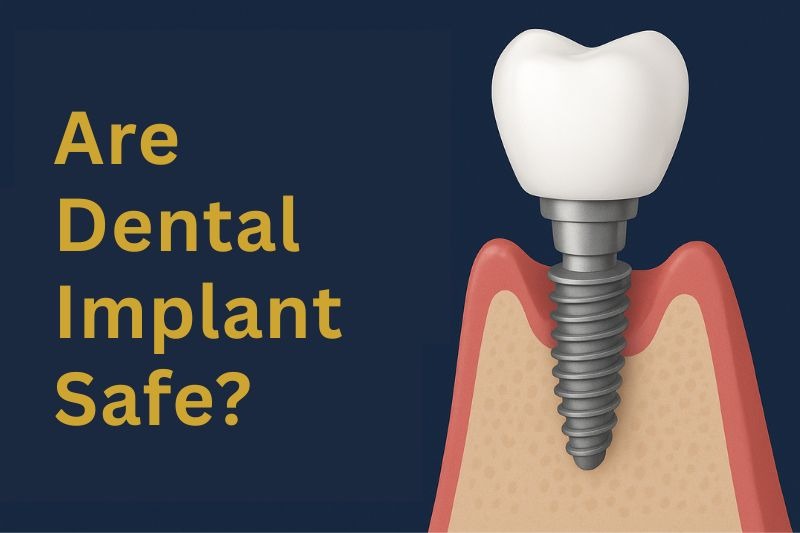
Dental implants are titanium (or sometimes zirconia) posts placed into the jawbone to replace missing teeth. Through a natural process called osseointegration, bone bonds with the implant, creating a strong foundation for a crown, bridge, or denture. This means implants function and feel much like your own teeth.
So, Are They Safe? Yes! When Planned and Done Carefully
Dental implants are among the most predictable and scientifically supported procedures in dentistry. With modern techniques and materials, the vast majority of implants integrate successfully and provide a long-lasting solution. In fact:
- Only about 5-10% of implant cases experience complications, and most of those are minor and treatable.
- True implant failure where the implant doesn’t integrate or must be removed occurs in only about 1-3% of cases.
Compared to most surgical procedures, that’s a remarkable safety profile when cases are properly evaluated and executed.
Why Implants Are So Safe Today
- Visualize bone height, width, and density
- Identify critical structures like nerves and sinus cavities
- Select the ideal implant size and location before surgery
Common Safety Concerns
What if a nerve or sinus gets damaged?
This is one of the most common fears patients voice. Yes, nerve or sinus injury is possible in certain parts of the jaws, but in properly planned cases with modern imaging it’s exceedingly uncommon. The planning software and guided surgery we use help avoid these structures and greatly reduce risk compared to older “freehand” techniques.
Can my body be allergic to an implant?
Who is at Higher Risk?
- Smoking or heavy alcohol use
- Uncontrolled diabetes
- Poor oral hygiene or gum disease
- Bruxism (teeth grinding/clenching)
What Does Success Look Like in Real Life?
Here’s one of our routine success stories that highlights what safe and predictable really means:
A healthy, non-smoking patient in their mid-40s lost a lower molar due to trauma not disease. With good bone volume and excellent oral care, we planned the case using 3D imaging, placed the implant with guided surgery, and let it heal without immediate loading. Because risk factors were minimal and the patient followed instructions and maintenance visits, the implant integrated fully, and the surrounding tissues stayed healthy. Function and comfort were restored without complication.
This is exactly the scenario where implants shine: predictable, long-lasting, and harmonious with the patient’s natural anatomy and health.
When Implants May Not Be the Safest Choice
Part of safe care is knowing when not to place implants. I’ve recommended alternatives (like bridges or dentures) in situations such as:
- Uncontrolled systemic conditions (e.g., uncontrolled diabetes)
- Heavy smokers unwilling to quit
- Severe bone loss without bone grafting options
- Patients without the ability or willingness to maintain good oral hygiene
- Certain medical treatments (e.g., high-dose anti-resorptive therapy)
In these cases, choosing not to place implants is actually the safest decision.
A Note on “100% Success Rates”
You’ll see marketing claims about perfect success rates, but here’s what they usually skip:
- Short follow-up timeframes (often a few months)
- Exclusion of higher-risk patients
- Ignoring long-term complications like bone loss or prosthetic issues
No surgical procedure is flawless, and true long-term success takes good planning, good biology, and good maintenance.
Materials and Long-Term Safety
The titanium implants with decades of clinical data behind them are still the gold standard for safety and integration. Zirconia has a place too, especially for patients with metal sensitivities but it has a shorter track record. What matters most is biocompatibility + consistent manufacturing + restorative support over time.
Conclusion
Yes, dental implants are safe for the vast majority of patients when placed with careful planning, proper imaging, and thoughtful execution.
Their safety record, predictability, and long-term success make them one of the most trusted solutions for tooth replacement in modern dentistry.
And as with all healthcare decisions, the safest outcomes come when you work with a clinician who values transparency, individualized assessment, and long-term care not just quick quotes or cookie-cutter treatment plans exactly the way we approach care at Chattanooga Dental Home.